
Hour 1
Grey Market Fundamentals
Understand legal-but-unofficial distribution, buyer motivation, risk language, and trust cues.
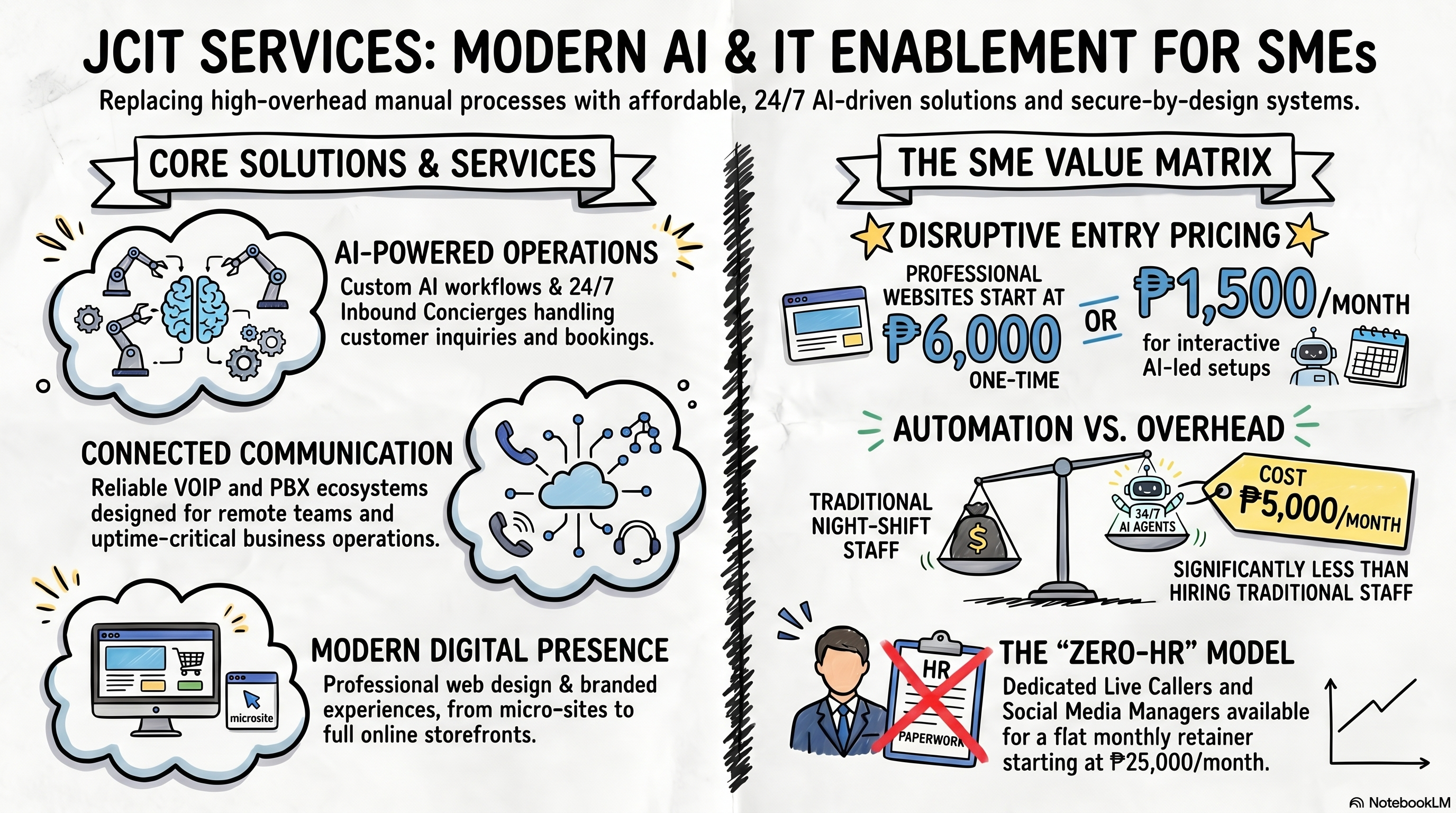
This training is designed to help SDRs sell professionally in grey market-adjacent categories while staying compliant, building trust, and generating qualified leads for JCIT services and partner brands.

Use this page as the live training handout. Each hour combines the core lesson, a visual example, a practice prompt, and supporting YouTube research links.
Understand legal-but-unofficial distribution, buyer motivation, risk language, and trust cues.

Connect client problems to websites, apps, storefronts, fulfillment, and partner product education.
Practice sourcing leads through Facebook, X, Telegram, referrals, and partner communities.

Run qualification, pitch, close, follow-up, and commission tracking with clean records.
Training focus: Learn how to explain grey market products clearly without creating legal, health, or platform risk.
The grey market refers to products that are legally manufactured but sold through unofficial or unauthorized channels. These products are not counterfeit/fake, are usually imported from other countries, may be sold without official local distribution, and are common in wellness, supplements, fragrances, and niche lifestyle products.
Training focus: Position JCIT as the technical engine behind a client’s sales process, customer operations, and online revenue channels.
JCIT provides digital solutions for businesses operating online. Your job is to listen for the business problem, then connect it to an outcome-oriented service offer.
What we offer: Business websites, landing pages, ecommerce websites, custom branded pages.
SDR talking points: Professional presence, mobile-friendly, SEO optimized, fast deployment, conversion-focused.
Ideal clients: SMEs, ecommerce brands, influencers, clinics, wellness brands, grey market stores.
What we offer: Mobile applications, internal business systems, ordering systems, CRM dashboards.
SDR talking points: Automation, better customer experience, scalability, real-time tracking.
Online storefronts allow businesses to display products, accept payments, manage inventory, and process customer orders.
SDR talking points: Easy checkout, social media integration, conversion tracking, multiple payment options.
Services include: Order management, delivery coordination, inventory handling, customer notifications.
SDR talking points: Faster delivery, better customer experience, reduced operational stress, scalable logistics.
Poppers are inhalant products commonly used for relaxation, recreational experiences, and enhanced sensory experiences. In many regions, poppers are considered grey market products because regulations vary, distribution channels are limited, and products are often imported.
Pricing is affected by import costs, supply availability, brand reputation, product potency, and shipping risk. Position value as reliability, authenticity, trusted sourcing, customer support, and discreet handling — not “cheap.”
Peptides are short chains of amino acids commonly associated with wellness, recovery, fitness support, and skin/anti-aging communities. Peptides often operate within grey market spaces because regulations vary internationally, some products are research-use only, and distribution is community-driven.
Pricing is affected by purity, supplier reputation, manufacturing source, storage requirements, and shipping conditions. Position value as product consistency, trust, quality sourcing, and community credibility.
Training focus: Turn social conversations into qualified leads while keeping records, avoiding banned terms, and moving serious buyers into the correct handoff channel.
A lead is a person who may be interested in buying a product, using a service, or learning more about the brand.
Lead generation is the process of finding potential customers. Common lead sources include social media, referrals, online communities, ads, and messaging platforms.
Why it works: Massive audience, local targeting, easy inquiries.
Best practices: Clean images, avoid banned words, reply quickly, move leads to Messenger or Telegram.
Sample workflow: Comment/inquiry → fast reply → private chat → qualify → close or handoff.
Why it works: Niche communities, viral potential, fast engagement.
Best practices: Engage trends, build authority accounts, post educational content, reply to relevant posts.
Content types: Product education, community memes, testimonials, lifestyle positioning.
Why it works: Privacy-focused, community-driven, high retention.
Best practices: Build active groups, provide updates, create exclusivity, support retention.
Uses: VIP groups, flash sales, customer support, community engagement.
Marketing partners promote products in exchange for commission, revenue share, free products, or affiliate incentives.
Examples: Influencers, community admins, resellers, referral partners.
SDR responsibilities: Recruit partners, maintain relationships, track performance, provide marketing assets.
Training focus: Keep every lead, close, payment, markup, and commission traceable from first touch through payout.
Tracking commissions helps measure performance, motivate SDRs, and ensure transparency.
| Metric | Example |
|---|---|
| Per Qualified Lead | ₱100 |
| Per Closed Sale | 5%–10% |
| Monthly Target Bonus | ₱5,000 |
| Team Incentive | Shared pool |
This is a condensed, practical summary for day-to-day SDR work. The signed agreement governs if anything conflicts.
| Brand / Service | Commission | Notes |
|---|---|---|
| PoppersGuyPH (Exclusive) | ₱50 / item | Plus 100% of your markup |
| JCIT Services | 30% of total sales | Paid after JCIT receives full payment |
| deluLubes | 30% of total sales | Paid after JCIT receives full payment |
| PepperzGlow | 8% of total sales | Paid after JCIT receives full payment |
Never:
Top SDRs follow up consistently, remember repeat customers, build communities, and focus on long-term trust.
These links support the training hour by hour. Use them for discussion, roleplay preparation, and self-study between live coaching sessions.
Review how unofficial distribution differs from counterfeit products and why careful language matters.
Study examples of small-business automation, websites, apps, and customer operations.
Watch practical approaches to prospecting, social selling, Messenger follow-up, and lead qualification.
Review basic sales pipeline tracking, conversion metrics, and commission spreadsheet workflows.
Use roleplay videos to practice opening lines, discovery questions, objection handling, and next steps.
Review ad policy and compliance concepts before posting or pitching regulated-adjacent products.
By the end of training, SDRs should be able to: